Understanding & Managing Your Dog's Anxiety
Anxiety can come from anywhere — here's how to help.
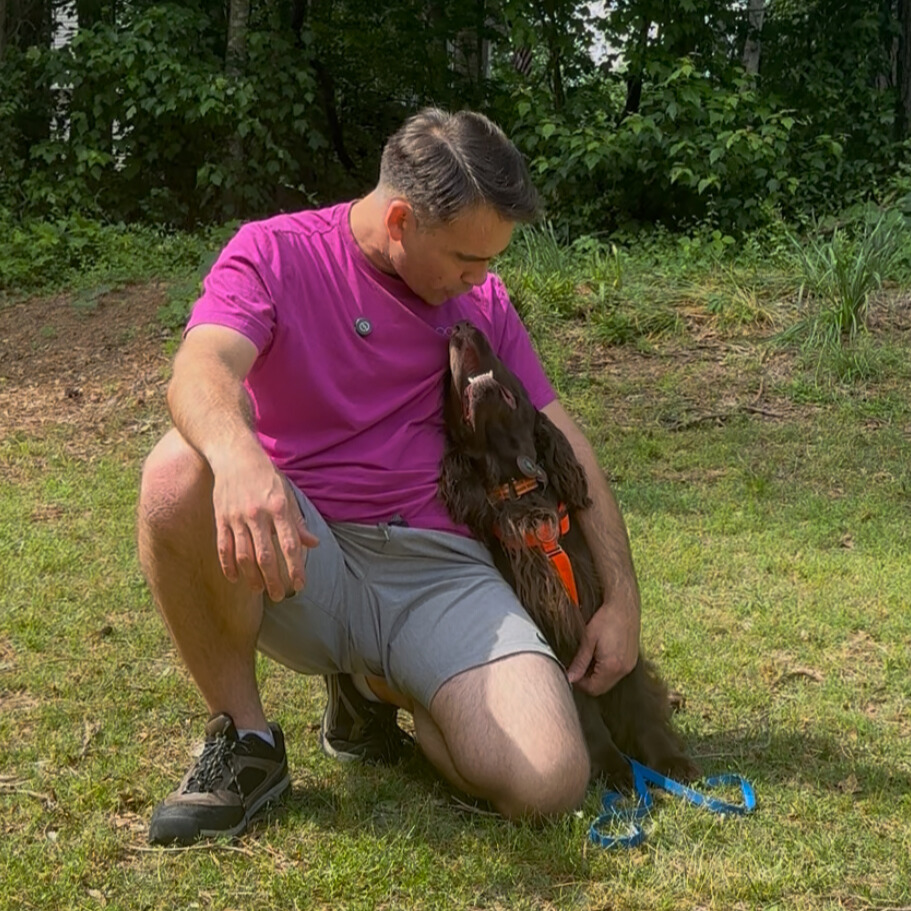
We all know that Covid and the lockdowns had a huge impact on our lives and our dogs. Now that it is long past, and you're still struggling with your dog, let's discuss why and what we can do to help.
When anxiety in dogs comes up in conversation, I often hear my clients default to the idea that their dog was abused before they got them. I would like to, instead, consider that anxiety can come from ANYWHERE and EVERYWHERE.
Anxiety can show up due to many things like:
- Genetics
- Life Experiences
- Lack of Clarity
- Lifestyle
- Relationships
And more…
The 5 sources of anxiety
Where anxiety actually comes from
Select a source to read Joel's take on it.
Genetics
Genetics are what they are with any dog that you get. While some people spend decades breeding their lines to create their idea of the "perfect dog" while others just grab whatever dog they find at the shelter and that ends up being the best dog anyone has ever seen!
While we should strive to be informed about the genetic traits our dogs possess we also have to understand that genetics can't be changed and are only a small piece of the puzzle. We have come to expect certain things from certain breeds, like barky little dogs, beagles that can't keep their nose off the ground, rotties that rumble and huskies that will not be contained.
By recognizing their genetics, we can better understand our dogs and can help them feel better about themselves, their environment, their day to day lives and the people around them. It's not all about genetics, but we can't just leave it out of the conversation when addressing each dog as an individual.
Cases of Genetic Anxiety issues could look like:
- The young pitbull who went viral after they ate through the side of a house
- Ripley - my client who ate the copper pipe off the toilet and caused mom and dad to have to remodel
- Archer - My brother's dog who jumped out a second story window because he wasn't kenneled when mom left for the store!
These are dogs who were always going to struggle. Does that mean they can't smooth things out and live safe and normal lives? Not at all.
Life Experiences
Your dog's experience of the world is relatively 0 in comparison to yours. Even if you take your dog here and there from time to time. They will never amass the amount of experiences that you had, and they definitely won't be given the thoughtful, careful slow introduction to … everything the way you did.
Which causes a perspective that we have trouble understanding. We hardly ever consider the "pressure" of the surrounding environment unless its a fairly extreme circumstance crowds/heights/dark alleys
Meanwhile dogs that spend 95% of their lives livingroom/backyard/dogpark They have such little experience in the world, every smell/noise/person/dog/bird/squirrel … can be extremely impactful.
In other words, you have been "desensitized" through repeated exposure to meaningless stimuli. Your dog has not.
If your dog's life experience includes traumatic events that can add fuel to the fire, and the only thing worse than a fear of the unknown is knowing the fear is real.
The reason I mention it at all is to break the idea that your dog is somehow damaged goods that cannot be repaired! This is in no way true!
Our job as pet parents is to guide our dogs to their best possible outcomes.
You know it is not in a child's best interest to sit on the couch all summer buried in video games, so you make them do other things so they will be better prepared for life as an adult.
Your dog is much the same. If you never give them life experiences, then when they NEED to have one, they will have no resilience, experience or skills to cope with the world they are thrust into. They need to build lots of good experiences to find success and we need to help them have those.
Lack of Clarity
If your dogs have no idea what it is that you actually want, how do they know how to avoid making you mad? You yelling, punishing, or getting mad without them understanding why, can definitely have a major impact on your dog.
The way I respond to my dogs when they do something "wrong" can either be kind and helpful, guiding them to the answer and meeting their needs or a confusing mess of emotions and unfairness.
Slight moments of discomfort or defiance can quickly grow into troublesome behavior often labeled anxiety if they get rewarded. Dogs do what works to better their position. For example; a dog gets put into a crate, he screams, he gets let out.
If the dog was thinking about how to get out, instead of having a panic event. Whatever works to get him out, becomes a more valuable behavior.
How this becomes anxiety is when the dog believes he knows the answer to this puzzle, and then for whatever reason his answer STOPS working (you stop letting him out). The solutions he thought he had are not effective, leaving him without any clear solution.
The good news about this scenario is it's usually a fairly straightforward process of Stopping the problem while we build value and satisfaction through play, crate train, and then readdress the problem. (see the 4 steps of behavior change)
If only this were all cases of anxiety.
Lifestyle
Dogs with Big Deep anxieties need the fullest solutions. The more shortcuts you take and steps you skip the less likely you are to reach your full solution.
You must find the balance your dog needs between
- Structure and Freedom
- Play and calm
- Obedience and Neutrality
- Leadership and confidence
This is how we build a lifestyle for the dog that is balanced and addresses the dog as a complex, intelligent, sentient being. This idea is the cornerstone of why Scoob and I clients succeed, even those that continue to struggle after working with multiple other trainers.
Jimmy, Alyssa & Jeter struggled with anxiety and reactivity for years. No matter what they tried, they couldn't find a solution to a calm and happy home. They couldn't take him outside the house or backyard without major meltdowns.
Working together, we discovered that Jeter's lifestyle needed more freedom and less micromanagement day to day. We needed to focus more on his emotions rather than his actions and confidence building had to be done on his terms. (*shhh Jeter wasn't the only one who needed to learn to control their big anxieties ;)
A Year later, the fact that they welcomed their first child into the world and family with 0 issues from Jeter brings me a very special kind of joy.
Relationships
When I hear "We've tried everything" I say…
How would your dog answer these questions?
(There's a reflective exercise below built from these exact questions.)
For a little better understanding, imagine you had those answers to those questions in your own life. How would you feel day to day?
*thought - if dogs follow our lead, where are we leading them EMOTIONALLY. Is it logical to be able to teach a dog to be calm and stable from a place of excitement and instability?
The point is not to highlight shortcomings. The point is to show you there is often so much more that can be done to help your pup feel better and the fact that you are both far more intertwined than you thought.
Relationship
When I hear "We've tried everything" I say… How would your dog answer these questions?
How would your dog answer?
No scoring, no submit. Just sit with each one from your dog's point of view.
For a little better understanding, imagine you had those answers to those questions in your own life. How would you feel day to day?
*thought - if dogs follow our lead, where are we leading them EMOTIONALLY. Is it logical to be able to teach a dog to be calm and stable from a place of excitement and instability?
The point is not to highlight shortcomings. The point is to show you there is often so much more that can be done to help your pup feel better and the fact that you are both far more intertwined than you thought.
Finding the best workable solution for you and your anxious dog isn't impossible but it is a puzzle and it will take time to put all of the pieces together.
Building individual solutions that work for your family and your situation takes enough knowledge and experience to know when to deviate from the program for something that actually works.
Sometimes this is a process of trial and error.
Arrows at a target
I envision it as firing arrows at a target. Not every arrow will hit its target, but the more arrows in the quiver, the more likely we are to hit the bullseye.
I have a lot of arrows and I'm happy to share them if you like
Click Here if you would like to Chat with me about your dog and what the path to success looks like for you
Until then… Find something your dog loves and little by little by little use it to push them outside of their comfort zone.
Pretty soon, little by little will be a very long way.