Decoding Dog Training
5 Insider Insights Every Dog Mom & Dad Need to Know.
I hate to see it…
But I know it's true.
I couldn't imagine starting my dog parenting journey in this age of information.
With all the answers you could imagine, right at your fingertips, you'd think it'd be easy to find all the solutions you could ever hope for.
But actually, dog moms and dads from all over the world have come to me saying the same thing…
How do I know who to trust?
How do I know what will work with MY dog?
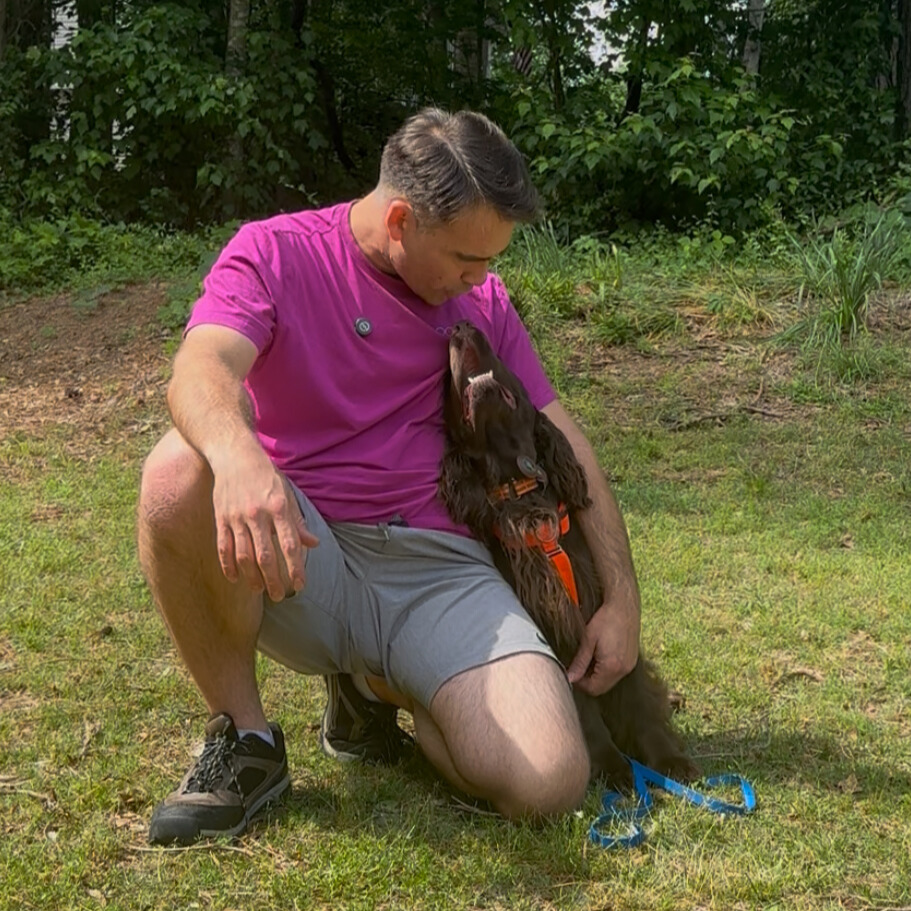
Hi, I'm Joel, and this is me with my dog, Scoob.
With over 250K followers across all platforms, my local board & train business just south of Atlanta in Sharpsburg, GA, and now through the launch of the Digital Dog School…
I've helped thousands of dog parents just like you around the world to take the suck out of puppy problems and help their best buddies become well-mannered members of the family.
I put together this handy little guide to help you decode dog training and navigate this universe of information and find the right solutions for you and your pup so that you don't waste more time and $$$$ on trainings that teach tricks but don't solve the behavioral issues keeping you from living your best life with your pooch.
These are the 5 insights every dog parent needs to know about dog training – and stick around because #5 is so honest, you won't believe I actually said it!
Dogs are AMAZINGLY smart and adaptable
Because dogs have been our companions for so long and are so well domesticated, it's rare that they can't understand or adapt to the needs and lifestyles of their owners.
In fact, more often than not, pup parents will bring them into the home, punish them for peeing in the house a few times, and then never have another major problem.
The dog learns to understand that
- Outside time is when he gets to go bananas and get the zoomies out
- Bed is where he sleeps
- If he barks at the evil mailman, he'll go away
- Mom gives him lots of pets and treats
And that's basically it.
Many dogs have minimal energetic and biological needs, and most will settle just fine into a life with little to no exercise or stimulation of the drives that make that dog who they are as a dog…
Simply living out their days satisfied with short walks and sniffing the hot spots, or soaking up the sun in the backyard.
If no problems come up, then that is the life that most dogs will live out with their owners…
Which is totally fine… Until it's NOT.
These are the kind of dogs that most people, if they're being honest with themselves, both expect and want.
This adaptability in dogs is the very thing that makes them such amazing companion pets…
And yet it leads us right into a major problem…
WHO and WHAT is this creature living with me?
Because dogs are so amazing at adapting, humans generally expect them to just be, well, amazing.
They go into adopting a dog with the expectation that he will just assimilate into their lives seamlessly with little to no education or consideration.
Often with no more thought put into acquiring a dog other than how cute he is or that she needs rescuing.
But here's the truth: Most dog owners have little to no knowledge about the animal they've decided to share their home with.
Few owners dedicate time to understanding all the various aspects that make up the complex needs of a dog.
Most will just continue to feed them the same cheap brand that the breeder or shelter sent home with them. The relationship with the closest vet around the corner is limited to emergencies or when the dog becomes very sick. Dog training is usually limited to making them sit for a few seconds before dinner is presented. And the dog park is where he gets his pent-up energy out while his parent catches up on TikTok.
And I don't mean any of this to be insulting!
For most American dog owners, this amount of education works just fine for everyone.
The problem comes when negative behaviors begin to grow, and owners don't know how to control or set boundaries with the dog.
And by the time they seek out professional help, the problems have grown so large that the owner is on the verge of giving up.
And what we need here is a thorough education…
If the dog acts anxious, aggressive, or reactive, they might need an education that would be analogous to a college-level chemistry course, but they are struggling even to get through their ABC's and 123's…
All dogs are individuals
It's human nature to want to categorize things in neat little piles. In general, we tend to group dogs together by their breeds.
Most people think that if they've met one or two dogs of a certain breed, then they can automatically assume that the rest of the dogs of that breed act just like those particular dogs.
Well, just like with people, if you expected them to act in a certain way by the way they look, then you would be wrong more often than not.
And as much as we like to think we can guess the way a dog will behave by its breed (or even by breed group), it's just not really that simple.
Genetics can be extremely delicate… and even surprising.
Just because you believe you have the right match-up of breed qualities/temperament to your lifestyle needs, it probably won't turn out the way you think.
Then add in the fact that a large portion of dogs are mixed breeds…
Plus, breeders will often just breed whatever animals they've got living in the backyard, instead of carefully curating a genetic line to produce the very best in predictable, stable, healthy dogs.
Long story short, it's a crapshoot.
The reality of it is that it's very difficult to ever get EXACTLY everything that you think you want in a dog.
What this means is that if you want to be successful in training your dog, you must adapt the training style to that particular dog.
Take it from me – even if you're very good at training dogs in one particular way, eventually you would meet an individual dog for whom that doesn't work so well…
Training requires NUANCE
Back in the day, when I worked for another trainer, I was silenced from talking about NUANCE.
In fact, they banned me from ever using the word with clients.
The truth is EVERYTHING about dog training is full of nuance.
There are so many techniques, tools, and behaviors to train. And each one, when mastered, can build a beautiful understanding relationship between dog and handler.
Not going to lie – dog training can be difficult and complex.
Sometimes what I have been doing successfully with dozens of dogs… suddenly doesn't work with this new dog.
Dog training isn't just about techniques. It's not a hard science. It's a mix of methods and personalities, and then add in the technical application of actually working live with another LIVING BEING?
It's a lot.
When people try to boil dog training concepts down to an A or B option to be easily understood by the masses, those dogs and handlers on the ends of the bell curve of the norm are often left forgotten or made to believe that their dog is just a hopeless case.
The problem with dog training (and why it can be so difficult to navigate) is because everything can be right AND wrong, all at the same time.
You must have a balanced mix of many factors to change behaviors in a dog.
Think about how hard it is for YOU to make changes when you've developed habits over months or years or even decades.
It takes time to understand each piece of the puzzle to bring your dog's life into balance. You've got to have flexibility, empathy, leadership, emotional control, patience PLUS the knowledge of training (and so much more) to successfully train your dog.
Learning how to navigate this and apply them to the life and behavior of YOUR dog isn't always easy. And that's why I'm here to help.
Dog training is an art
When we think about this idea, we can see that the tools used, the medium chosen and the skillset of the artist will give everyone a different result. Just because science says that yellow and red make orange, doesn't mean that you will always get the same shade when you mix red and yellow.
This shade and medium range is what makes art beautiful. There are many mediums and tools to choose from that will give you different results.
Dog trainers are essentially art teachers, and that means that sometimes they have knowledge of many mediums and can guide you through quite a few options or they specialize with one medium and should only be teaching that specialized class.
This is the issue that I see becoming more prevalent in the industry.
Some dog trainers think they are the best and want to show off to everyone how great they are at their medium. Until they are met with a medium they don't understand and end up trying to make pottery with a paint brush because they simply don't know how to use a pottery wheel.
When these trainers are met with a situation they don't have the depth of knowledge to take on, they will become defensive and waste a lot of time and energy yelling and arguing with each other on social media about anything and everything dog training.
You'll even see some of them shaming their clients and viewers! Shaming them for the tools or techniques they use, the amount of work they have done and even the trainers they follow–if they don't agree with them.
It's more than just a toxic waste of time. It confuses dog owners looking for some real direction and help, and it makes our industry look like it's full of crazy zealots. It's a real mess that seems to get worse over time.
I do my best to stay above the fray and be welcoming and accepting of (almost) all tools and training styles in the right situations.
You are looking for some direction, so I'm going to give you my best piece of advice.
What I mean is that you need to start with a trainer or two that you personally identify with and enjoy. Work directly with them or follow their training course.
It's not that these trainers will necessarily give you the best of what you need, or even that they will always be right for you. But by narrowing your scope, you will be able to understand what you need even better.
If you watch dozens of different trainers on TikTok doing dozens of different things to solve the same issue, you're going to be overwhelmed and have no idea where to actually go. When you are confused, it's easy to put finding the solution off to another day, but if only you knew what to look for, you'd be able to narrow down solutions much faster.
So, if you're CONFUSED, get some help!
It's the dog trainer's job to know the larger body of techniques and tools and translate it into what YOU need to know at the right time. They'll help you recognize your goals and discover the best pathway for you to get there.
Find someone you LIKE to guide you through this process and who understands all these insights I shared with you in this guide.
That doesn't necessarily mean choosing the very best, most expensive training available!
It means finding someone you TRUST that can ACTUALLY help you build that meaningful, fulfilling relationship with your dog that you want.
If you'd like my help in training your dog, tap here to join the Digital Dog School and start developing that relationship with your pooch TODAY. Uncover the good boy he really is!
Now… go Play with your dog!